There are few stories in Burgundy quite as extraordinary as that of Lalou Bize-Leroy. It is a story of family, ambition, conviction, conflict and ultimately vindication: of a woman who helped to build the modern reputation of Domaine de la Romanée-Conti, was removed from its management after a bitter dispute, and then devoted herself to two domaines of her own whose wines today stand alongside – and, at the very top of the market, even command considerably higher prices than those of DRC.
For me, it is one of the most remarkable stories in all of Burgundy.
Unfortunately I have never visited Domaine Leroy but our recent dinner provided an opportunity to approach that story from a slightly different direction. We were not tasting the almost unobtainable wines of Domaine Leroy or Domaine d’Auvenay. Instead, all the bottles came from Maison Leroy, the historic family négociant business from which Lalou’s extraordinary career began.
The wines, spanning 1959 to 1985, all came from a private German cellar that was opened following the demise of its owner and acquired by Vintage Investments AG with its Chairman Alexandre Challand and Managing Director Anthony Young leading through the tasting. Inevitably, given their age, bottle condition played its part. But the best bottles provided a fascinating demonstration of the quality, longevity and individuality of old Maison Leroy wines.
Before getting to them, it is worth understanding the remarkable woman behind the name.
From Maison Leroy to Romanée-Conti
Maison Leroy was founded in Auxey-Duresses in 1868 by François Leroy. It developed over subsequent generations into an important Burgundy négociant, but the defining moment for the family came through Lalou’s father, Henri Leroy.
In 1942, Henri acquired 50% of Domaine de la Romanée-Conti. The other half remained with the de Villaine family, creating the ownership structure that continues today.
Lalou joined the family business in 1955 and gradually assumed greater responsibility. In 1974 she became co-director of Domaine de la Romanée-Conti alongside Aubert de Villaine.
For almost two decades, these two formidable personalities presided over what was becoming the most celebrated wine estate in Burgundy. Lalou was far more than a commercial figure. She developed a reputation as an exceptional taster and an uncompromising judge of quality, with strongly held views about viticulture, yields and what Burgundy should represent.
Maison Leroy, meanwhile, was closely intertwined with DRC through the commercial distribution of its wines. The relationship was not to last.
The rupture with DRC
By the beginning of the 1990s, tensions between Lalou Bize-Leroy and Aubert de Villaine had become increasingly difficult to reconcile. Distribution and commercial control of DRC wines were important elements in the dispute, although accounts of the period make clear that the disagreement was more complicated than a single issue. The decisive moment came in January 1992. At a DRC board meeting Lalou lost a crucial vote and was removed as co-director of Domaine de la Romanée-Conti. Maison Leroy also lost its role in distributing DRC.
She remained, through her family a co-owner of the domaine (today Perrine Fenal, Lalou’s only daughter is co-director of DRC), but operationally the break was profound. Consider for a moment what that must have represented. Lalou had spent almost two decades helping to run what was already the most prestigious estate in Burgundy. At the age of 59, she suddenly found herself outside its management.
For many people, that might have marked the end of the story. For Lalou Bize-Leroy, it effectively began her second act.
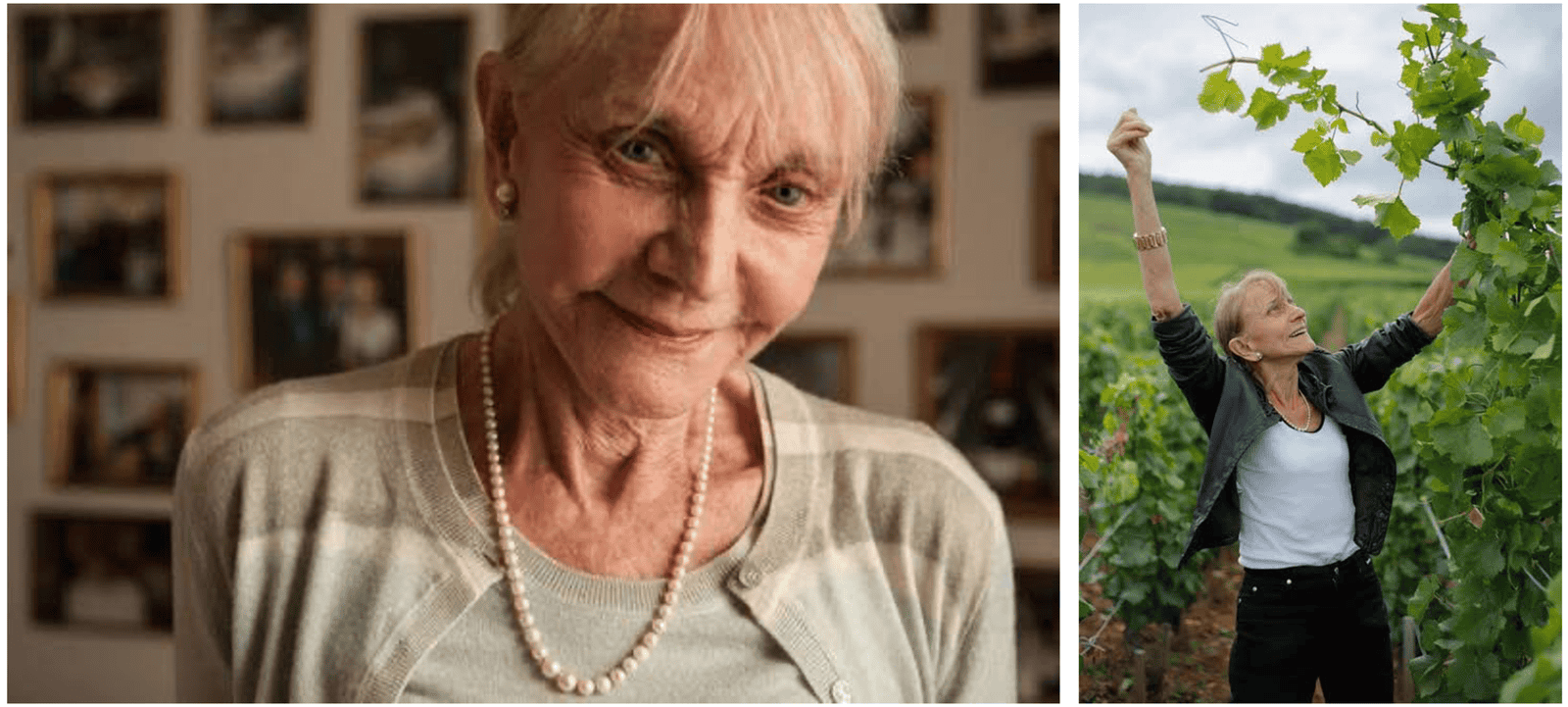
Lalou Bize-Lery – the Queen of Burgundy
The creation of Domaine Leroy
Lalou had already started preparing the foundations of an estate of her own. In 1988, she acquired the former Domaine Charles Noëllat in Vosne-Romanée, with vineyards in some exceptional appellations. Further acquisitions followed and Domaine Leroy eventually grew to approximately 22 hectares. The vineyard holdings are extraordinary: Musigny, Richebourg, Romanée-Saint-Vivant, Chambertin, Clos de la Roche, Latricières-Chambertin, Corton-Renardes and Corton-Charlemagne, among others.
More important than the names on the labels was what Lalou did with them. She became one of the earliest and most uncompromising practitioners of biodynamic viticulture in Burgundy after a visit to Nicolas Joly in Savennières, Loire. At a time when such methods were still viewed with considerable scepticism, she pursued them with absolute conviction.
Yields became extremely low. Vineyard work was meticulous. Chemical interventions were rejected. The objective was not to manufacture a particular Leroy style in the cellar, but to create vineyards healthy enough to express themselves with maximum intensity. The wines that emerged were correspondingly concentrated, perfumed and individual. Production was tiny. Demand became enormous.
Domaine d’Auvenay
Alongside Domaine Leroy sits an even smaller and in some respects more extraordinary estate: Domaine d’Auvenay. Named after Lalou’s home above Saint-Romain, d’Auvenay comprises less than four hectares. Its production is minute, but its vineyard holdings include some extraordinary parcels. There are red wines from such vineyards as Mazis-Chambertin and Bonnes-Mares, but d’Auvenay has become particularly legendary for its white Burgundy. Even more attention get her white holdings including Chevalier-Montrachet and Criots-Bâtard-Montrachet as well as tiny parcels in Meursault, Puligny-Montrachet, Auxey-Duresses and Saint-Romain. These wines have become some of the rarest and most valuable white Burgundies in existence.
The extraordinary reversal
And this is where the Lalou Bize-Leroy story becomes almost unbelievable. More than three decades after her removal from the management of DRC, the secondary market provides an extraordinary epilogue.
Current international market data places Domaine Leroy Musigny at around €60’000 per bottle on average, depending on vintage and source, with individual bottles sometimes considerably higher. DRC Romanée-Conti, long the benchmark for the world’s most expensive wine, typically trades at €18’000 , substantially lower average levels. The comparison in white Burgundy is equally striking. Domaine d’Auvenay Chevalier-Montrachet can trade above €20’000 per bottle, and recent market data has placed it at roughly twice the average price of €8’000 for DRC Montrachet. While scarcity is certainly a factor to the Leroy prices, as well as the fact that Lalou may not be around much longer given her age, they are an indication of collector demand, the message is unmistakable.
Domaine Leroy and Domaine d’Auvenay now occupy the same tiny summit of the Burgundy hierarchy as Domaine de la Romanée-Conti. For certain wines, the market places an even greater monetary value on Lalou’s bottles. There is an extraordinary symmetry to it. The woman removed from the management of Romanée-Conti in 1992 responded not by trying to recreate DRC, but by pursuing her own philosophy with almost fanatical conviction. Three decades later, some of the wines carrying her name have become even more valuable than the wines of the domaine she was forced to leave.
It is difficult to imagine a more remarkable comeback in the world of wine.
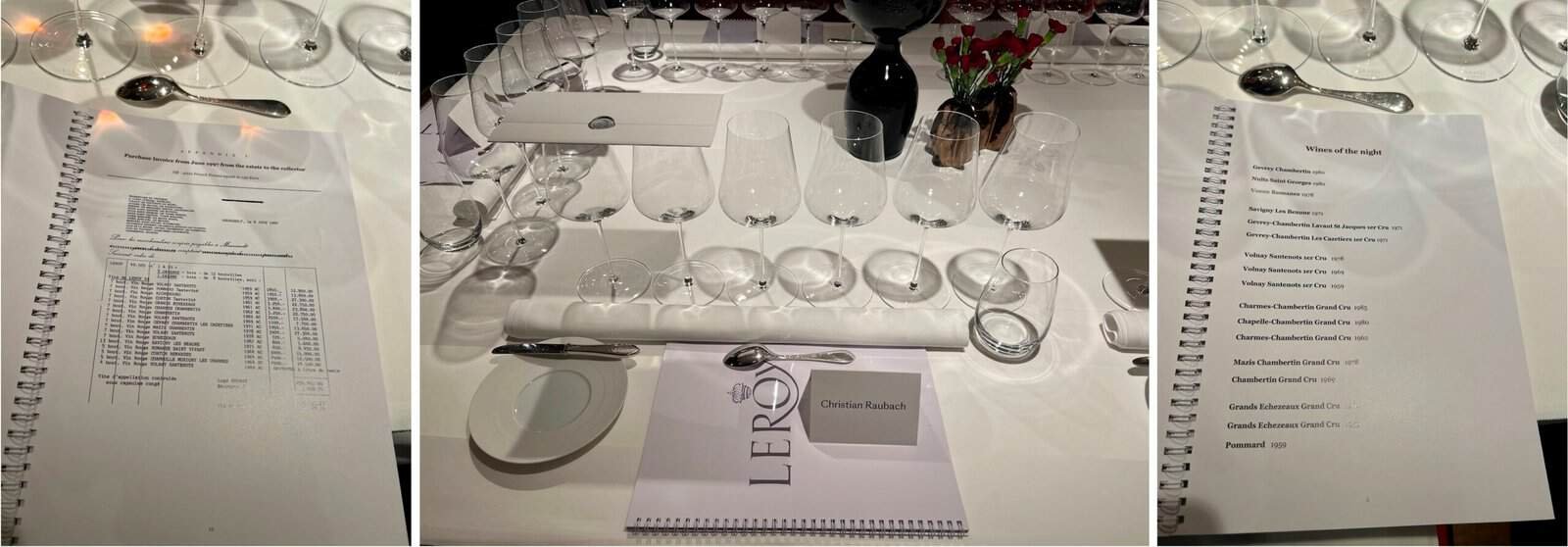
Tonight’s line up. Even a copy of the original invoice of the purchase by this meticulous collector still exists
Maison Leroy vs. Domaine Leroy vs. Domaine d’Auvenay
There is, however, an important distinction to make. The three Leroy names are sometimes used interchangeably, but they represent quite different wines.
Maison Leroy is the historic négociant business, founded in 1868. Its wines traditionally came from purchased grapes, must or finished wines rather than exclusively from vineyards owned by Leroy. Selection and élevage were nevertheless carried out according to the house’s standards. The extraordinary old bottles that occasionally appear at auction demonstrate just how seriously these wines were selected and cellared.
Domaine Leroy is the estate Lalou assembled principally from 1988 onwards. These are estate-grown wines from Leroy’s own vineyards, farmed according to her uncompromising viticultural philosophy. This is the source of Musigny, Richebourg, Romanée-Saint-Vivant, Chambertin and the other legendary Domaine Leroy bottlings.
Domaine d’Auvenay is Lalou’s much smaller personal domaine, with less than four hectares and microscopic production. Its white wines in particular—including Chevalier-Montrachet—have achieved extraordinary cult status.
That distinction matters for this tasting. These were not Domaine Leroy wines. Nor were they d’Auvenay. They were old Maison Leroy négociant bottlings. Nevertheless, several were astonishing.
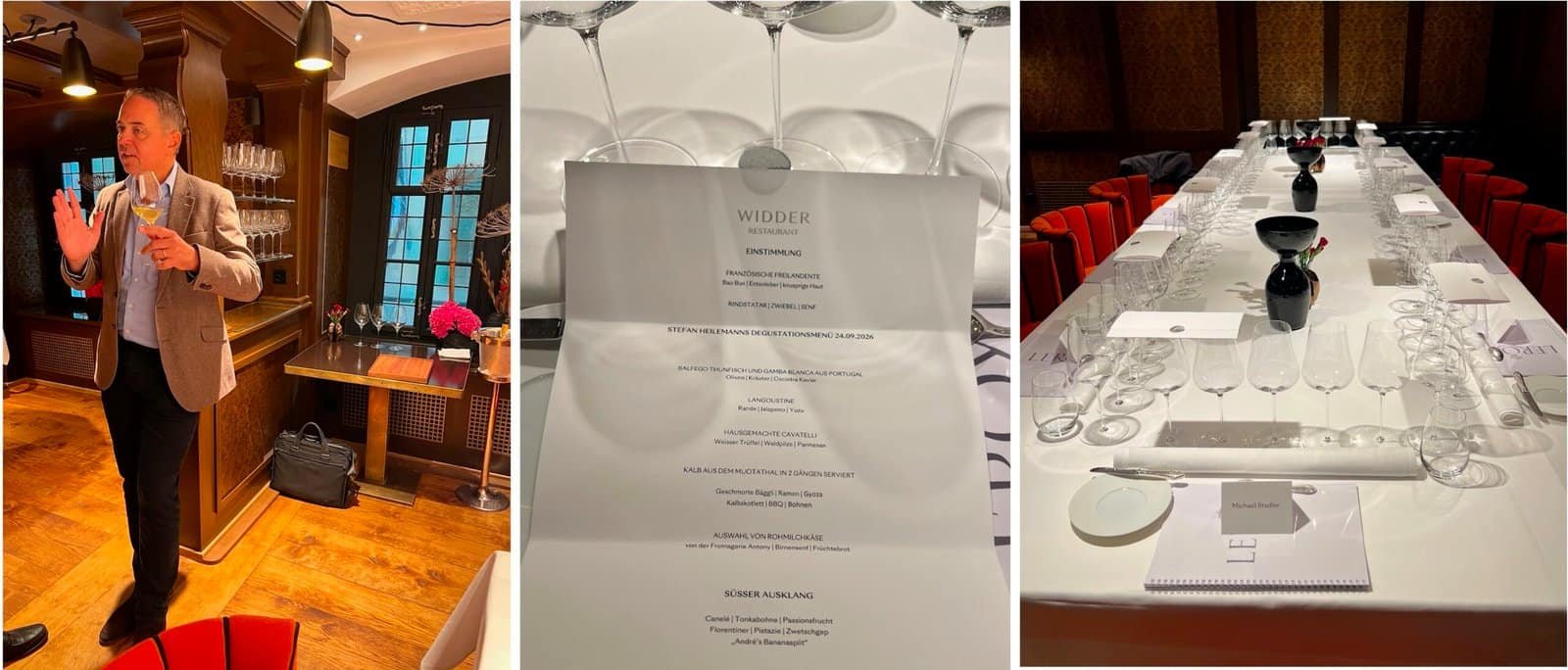
Alexandre Challand from Vintage Wine AG lead through the tasting
The Tasting
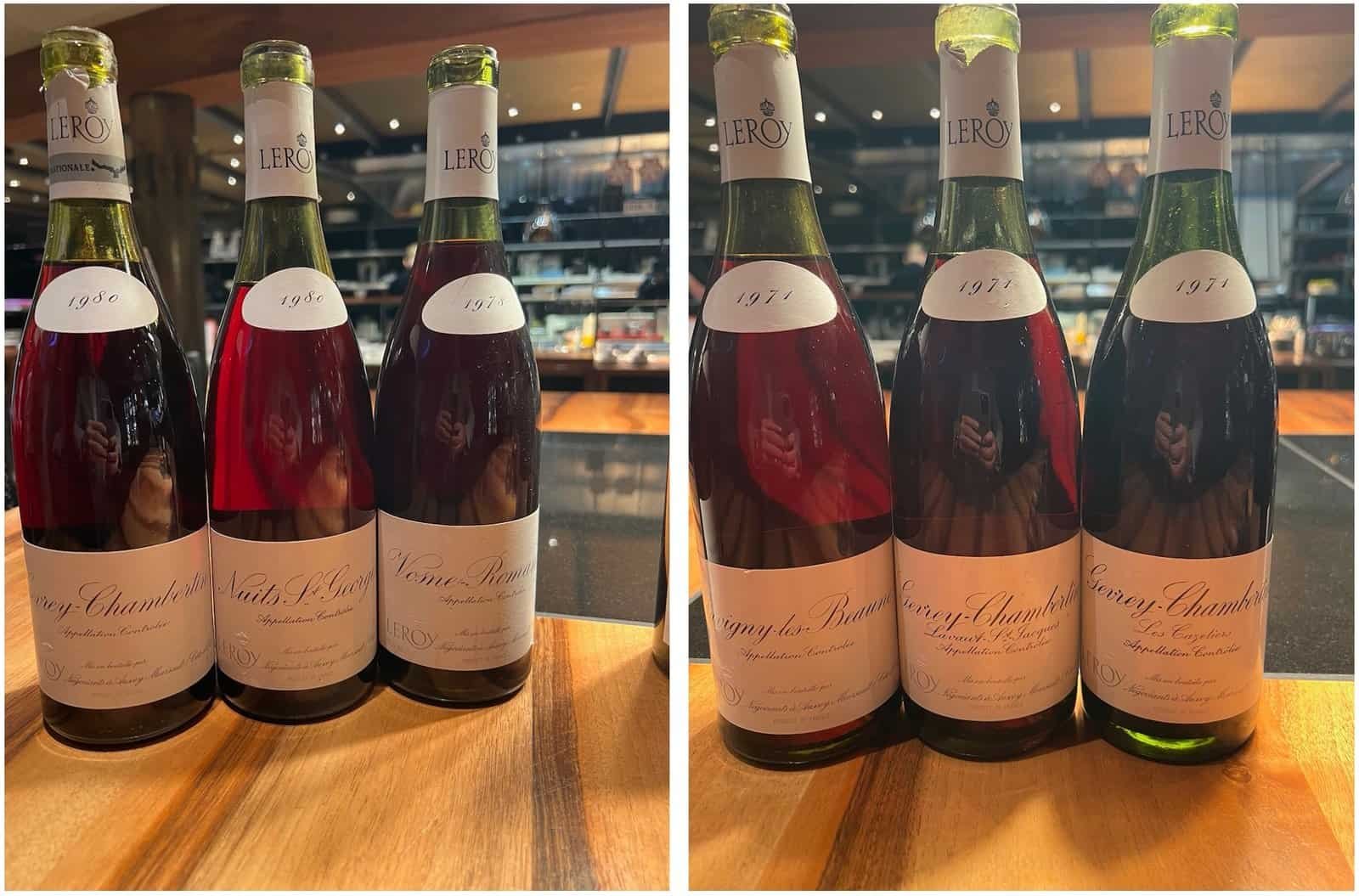
Flight 1 – 1980
1980 Maison Leroy Gevrey-Chambertin — 90 Points
Fully mature, indeed approaching the end of its life, though not oxidised. Very earthy aromatically, with mushrooms, malt and a slightly peaty note dominating what fruit remains. The palate is resolved and tertiary throughout. Interesting rather than exciting at this stage, and certainly one to drink up.
1980 Maison Leroy Nuits-Saint-Georges — 93 Points
A clear step up in complexity from the Gevrey. Autumn leaves join the earthy notes, with some attractive red fruit still woven through the mature aromatics. There is greater finesse on the palate, accompanied by a lovely spice-box character. Fully mature but showing rather more dimension. Drink up.
1978 Maison Leroy Vosne-Romanée — 93 Points
The most powerful wine of the flight, with astonishing depth for a village Vosne-Romanée. There is real density through the middle of the palate, with some darker blue fruit joining the more traditional red-fruited profile. Impressive material and considerable presence for its level.
Flight 2 – 1971
1971 produced some beautifully ripe wines in Burgundy, and this flight demonstrated just how compelling the vintage can be when the bottles have survived well.
1971 Maison Leroy Savigny-lès-Beaune — 97 Points
Wow. The first wine of the evening where I felt I encountered what I think of as the unmistakable Leroy signature. Gorgeous strawberry fruit, almost Rayas-like in its sweetness and perfume, mingling with dried flowers, autumn leaves and cured meat. The palate has extraordinary completeness and generosity while retaining finesse. How do you make a village Savigny-lès-Beaune like this? A fantastic bottle and one of the great surprises of the evening.
1971 Maison Leroy Gevrey-Chambertin 1er Cru Lavaut Saint-Jacques — 94 Points
A beautiful mature nose of dried flowers and strawberries. There is good complexity, though without quite the depth or magic of the preceding Savigny. A touch of farmyard funk and mushroom brings an additional tertiary dimension. Fully mature and ready to drink.
1971 Maison Leroy Gevrey-Chambertin 1er Cru Les Cazetiers — NR
An unattractive mouldy character dominates the nose. Flawed and therefore not rated.
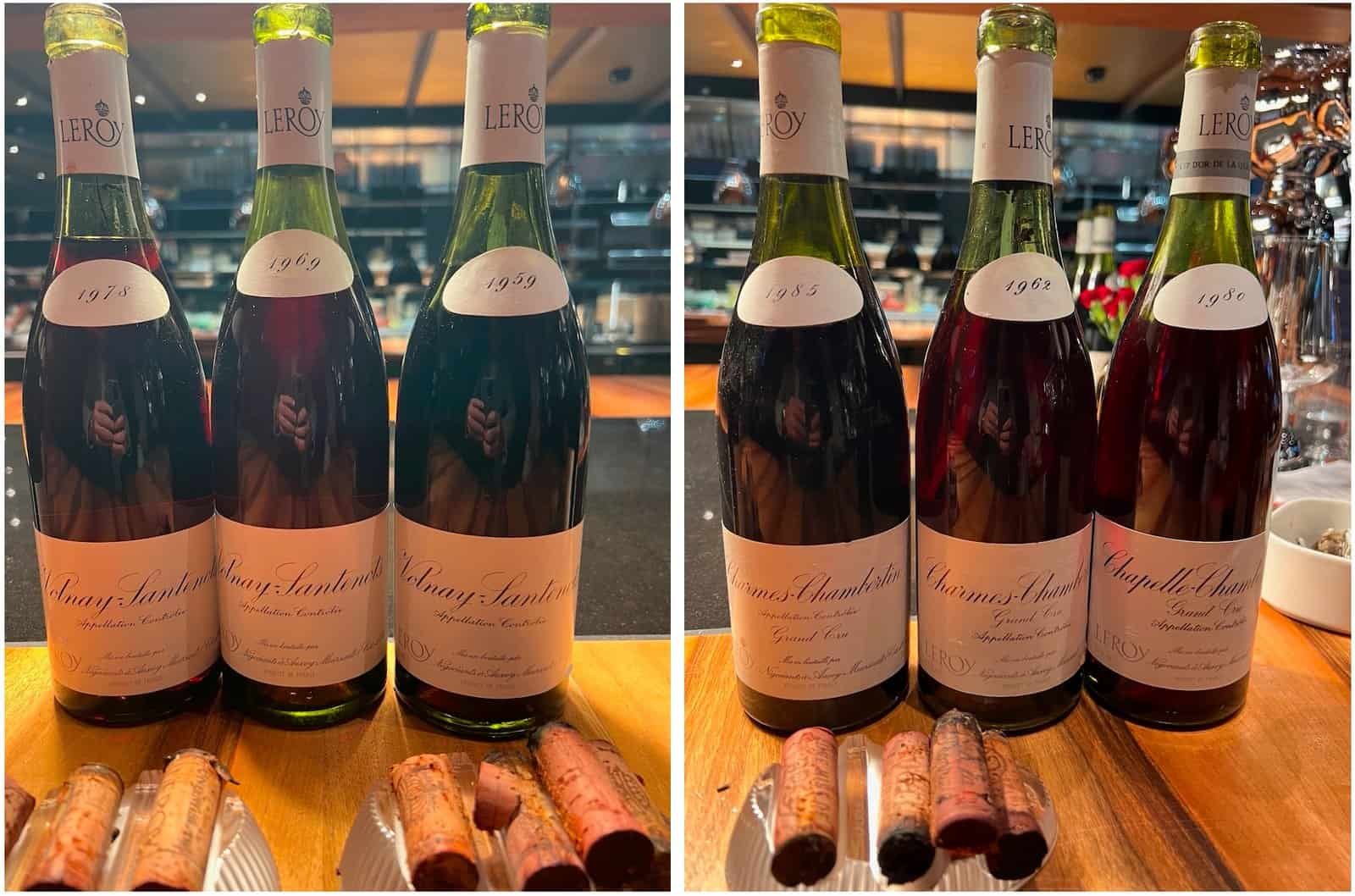
Flight 3 – Volnay Santenots
1978 Maison Leroy Volnay 1er Cru Santenots — 94 Points
Cool and restrained in style, but with considerable aromatic depth. Earth, spice and gingerbread emerge gradually from the glass. The palate has good structure and composure, without any excess weight. A serious, rather intellectual expression of mature Volnay.
1969 Maison Leroy Volnay 1er Cru Santenots — NR
Unfortunately compromised by an unpleasant stale character. Flawed and not rated.
1959 Maison Leroy Volnay 1er Cru Santenots — NR
Frustratingly, there is a light cork taint here, still drinkable though. The underlying material nevertheless is impressive, with considerable power still evident beneath the fault. Not rated.
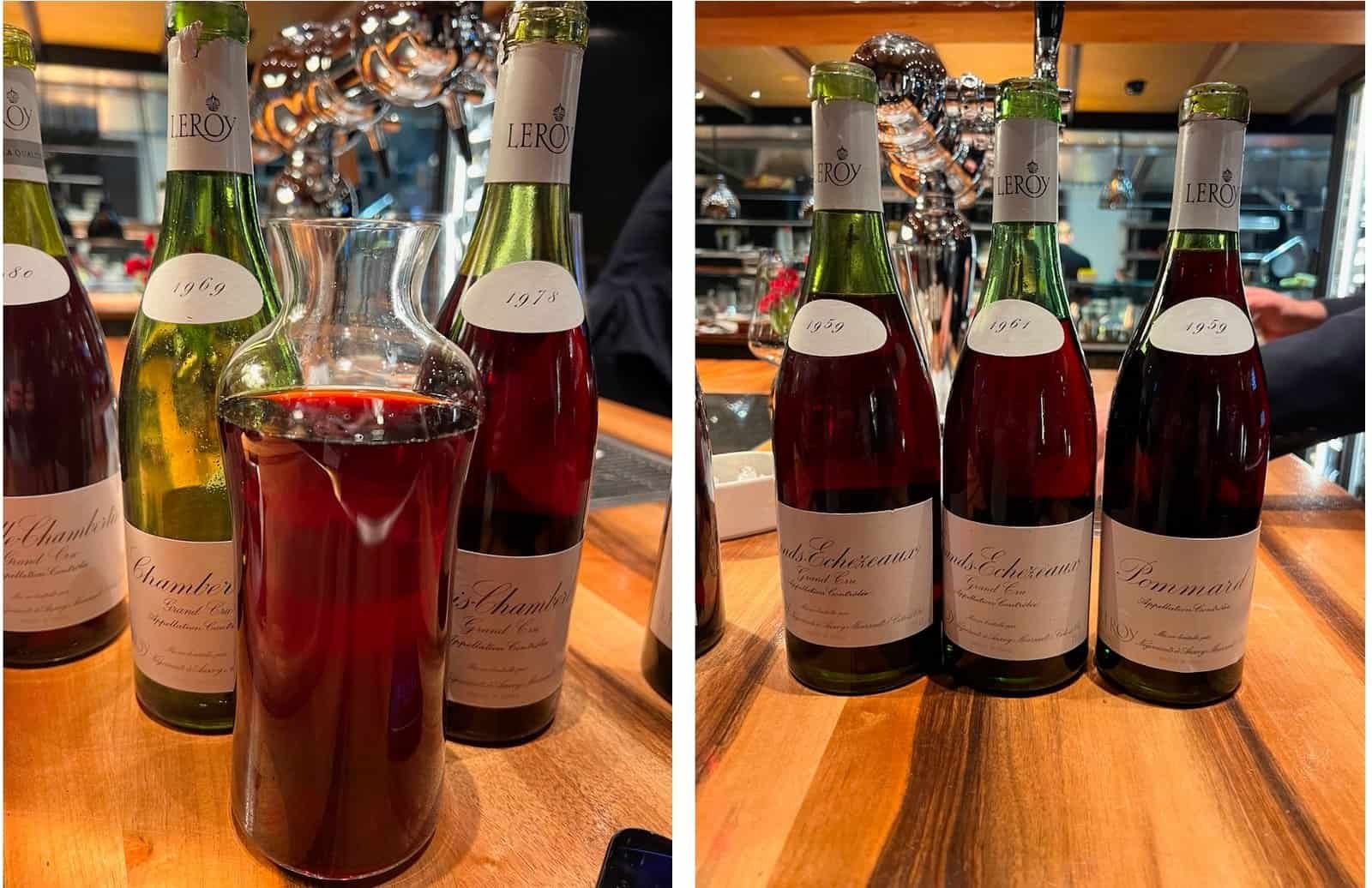
Flight 4 – Charmes-Chambertin
1985 Maison Leroy Charmes-Chambertin Grand Cru — 95 Points
Deep and complex aromatically, with black tea, gingerbread, pine, earth and an array of spices around the remaining red fruit. The palate remains surprisingly strict, but there is admirable depth and seriousness underneath. Perhaps not the most seductive Charmes-Chambertin, but a wine of substance.
1980 Maison Leroy Charmes-Chambertin Grand Cru — 96 Points
Lovely sucrosité here, with sweet strawberry fruit and spice giving the wine an immediately seductive character. Mushroom adds the tertiary note of a fully mature Burgundy without overwhelming the fruit. Harmonious, generous and beautifully evolved.
1962 Maison Leroy Charmes-Chambertin Grand Cru — NR
A faint cellar-cardboard character suggests light cork taint. Enough to compromise the wine, so not rated.
Flight 5 – The Grand Crus
1978 Maison Leroy Mazis-Chambertin Grand Cru — 97 Points
Dark-fruited and impressively precise, with earth, spice and cracked pepper adding complexity. There is real power and structure here, but without heaviness. The finish is long, controlled and refined. A compelling Mazis-Chambertin that combines authority with precision.
1969 Maison Leroy Chambertin Grand Cru — 95 Points
There is that lovely strawberry sucrosité again, but this time accompanied by cooler blue fruit. Mushroom and other tertiary notes remind you of the wine’s age, yet there is still sufficient fruit at the core. The cooler character of 1969 comes through in the acidity and more angular structure, but this remains a very fine old Chambertin. Fully mature; drink up.
1961 Maison Leroy Grands Échezeaux Grand Cru — 96 Points
A mature amber-garnet colour. Wonderful earthy aromas emerge alongside spice, raspberry and mushroom. There is a lingering sweetness to the fruit and impressive persistence on the palate. A very strong showing and a beautiful mature Burgundy, though ultimately overshadowed by the extraordinary 1959 that followed.
1959 Maison Leroy Grands Échezeaux Grand Cru — 100 Points
Amber-garnet in colour. Oh, this is magnificent. Wonderful Leroy aromatics of strawberry and raspberry, cinnamon and spice, with an almost Rayas-like sucrosité. Yet for all its richness, there is nothing heavy about it. The wine seems to glide across the palate. This is mature Burgundy at its most beguiling: a ballerina in full flight, graceful and seemingly weightless, yet with remarkable intensity and persistence. Fully mature, utterly harmonious and hauntingly long. This is true Leroy quality. A wine to die for.
1959 Maison Leroy Pommard — 95 Points
More garnet in colour than the Grands Échezeaux, and stylistically quite different. Yet remarkably, this village Pommard more than held its own next to the grand crus. There is tremendous generosity of fruit, allied to power, balance and a structure that is now beautifully resolved. Once again the appellation on the label seems almost irrelevant to the quality in the glass. What a village wine!
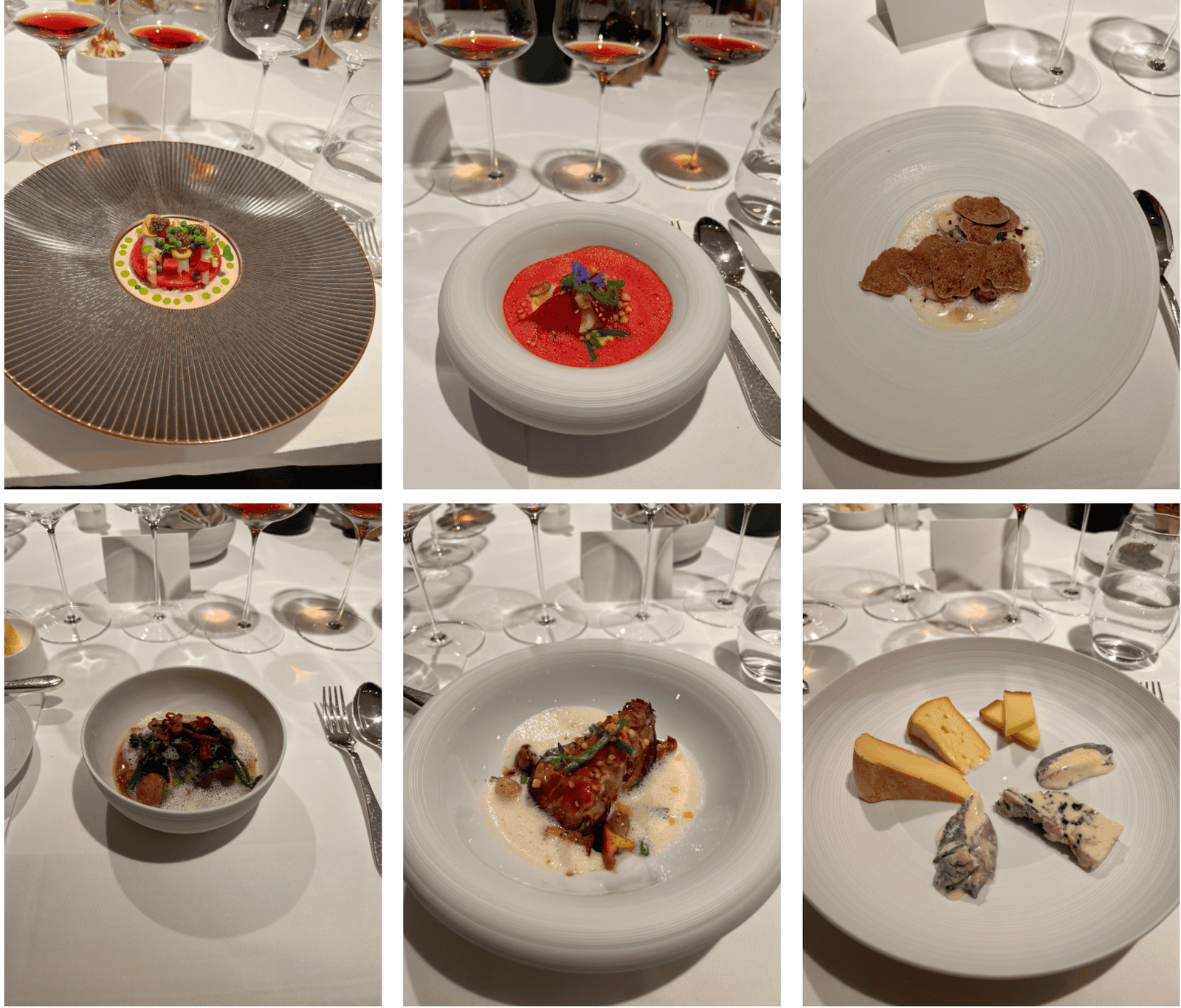
The tasting was accompanied by outstanding dished by Hotel Widder in Zürich
Author: Christian Raubach, WSET III, FWS, WSG Champagne Master
September 2026