The Jura has, over the past two decades, moved from near-obscurity to a position of quiet prominence among sommeliers and informed drinkers. Once largely overlooked beyond eastern France, its wines are now actively sought after for their individuality and sense of place. Despite this rise in reputation, pricing remains, in most cases, relatively accessible – though leading domaines such as Jean-François Ganevat or Domaine Overnoy have begun to command prices that, while still generally below top Burgundy, reflect their growing cult status and limited production.
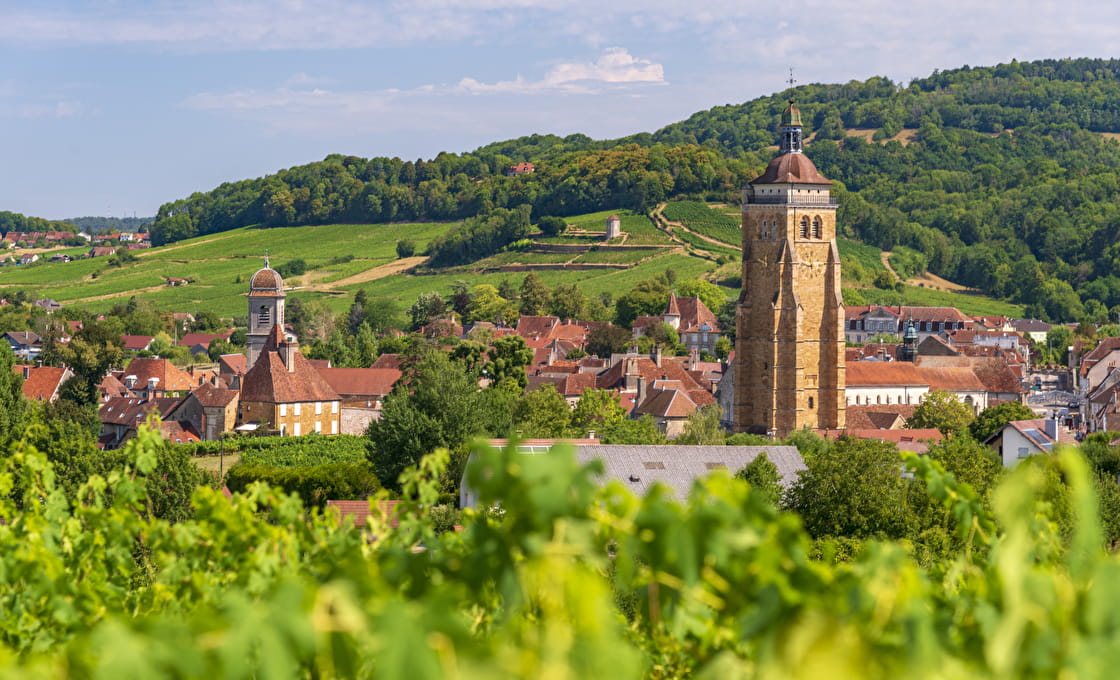
The landscape is markedly more rural than Burgundy, with a slower pace of life and a strong agricultural identity. Here, vignerons are often first and foremost farmers, working small, family-owned parcels with a deep connection to their land. The scale is intimate, the approach frequently artisanal, and the experience refreshingly unpolished – yet it is precisely this authenticity that underpins the character and growing appeal of the region’s wines. We have written a longer report on Jura after a visit in 2025. It can be read here.
Stylistically, Jura often invites comparison with Burgundy, not least because of its shared focus on Chardonnay and Pinot Noir. The whites, particularly in their ouillé (non-oxidative) form, emphasise freshness, tension and mineral clarity, while the reds tend toward lightness of colour but aromatic expressiveness, often combining delicacy with surprising persistence. Savagnin, the region’s signature variety, is especially compelling when handled in a non-oxidative style: it can evoke a hypothetical meeting point between Chardonnay’s structure and Chenin Blanc’s acidity and aromatic lift, resulting in wines that are both distinctive and versatile at the table. It has to be said though that the wines are also often funky and individualistic, so if your palate is calibarateed to sunny/fruity wines that please a wide palate, drinking Jura can be a challenge. If you come from Burgundy it will be less complicated to ease in.
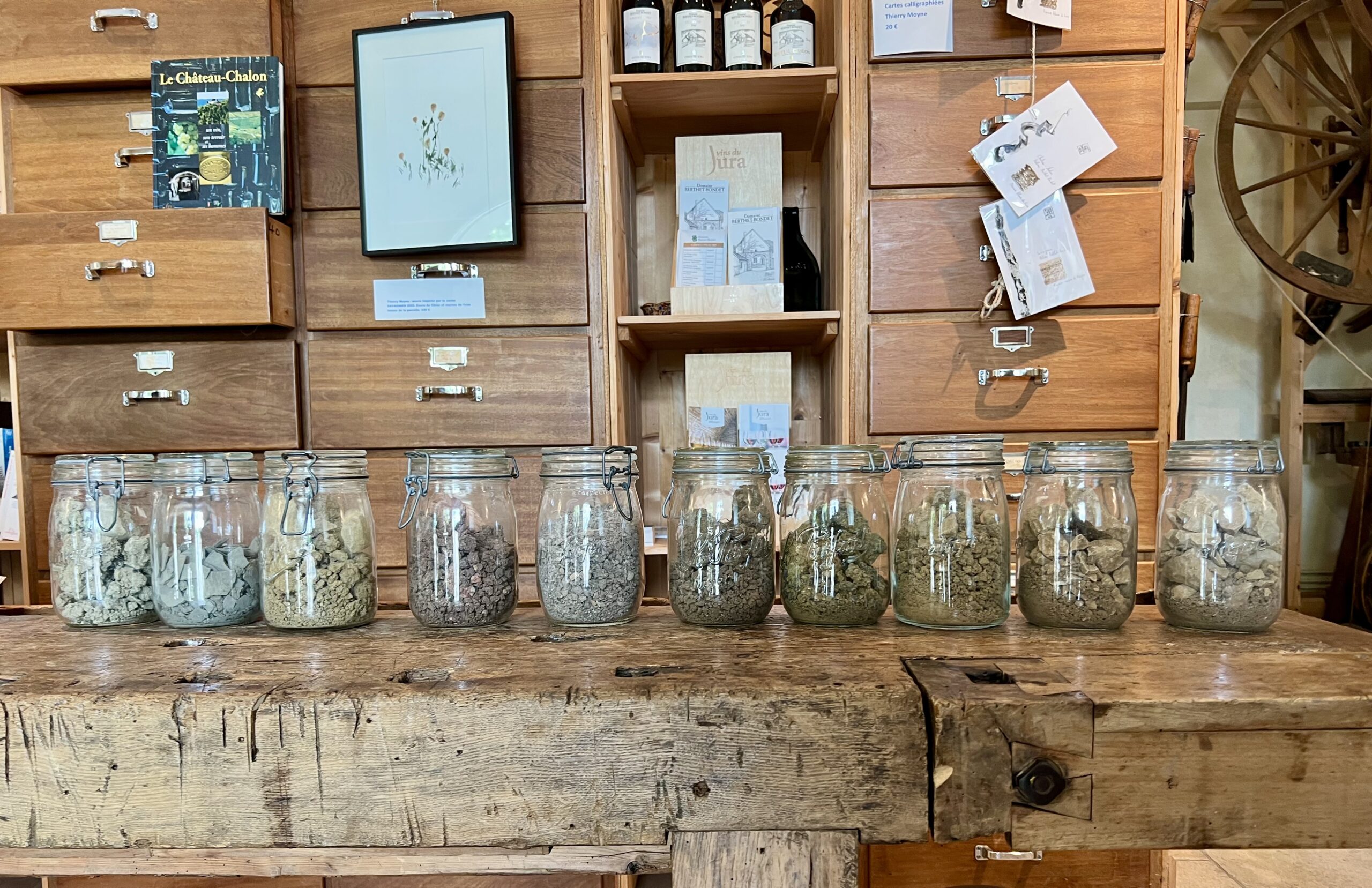
Different Jura soils – nicely displayed at the Domaine Berthet-Bondet in Chateau Chalon
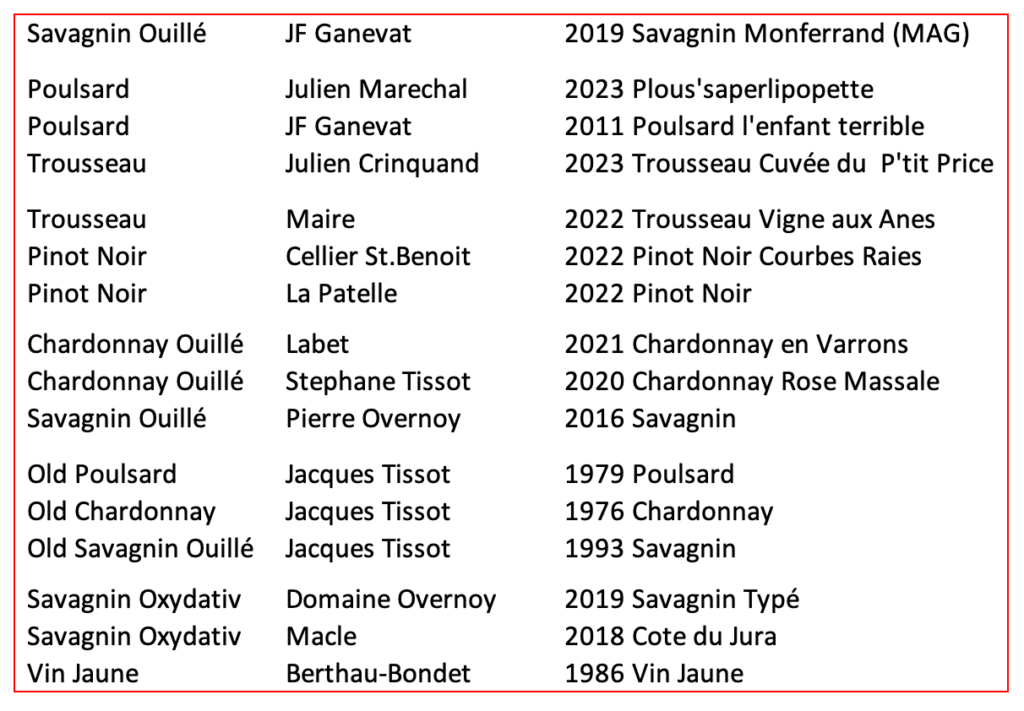
Whites
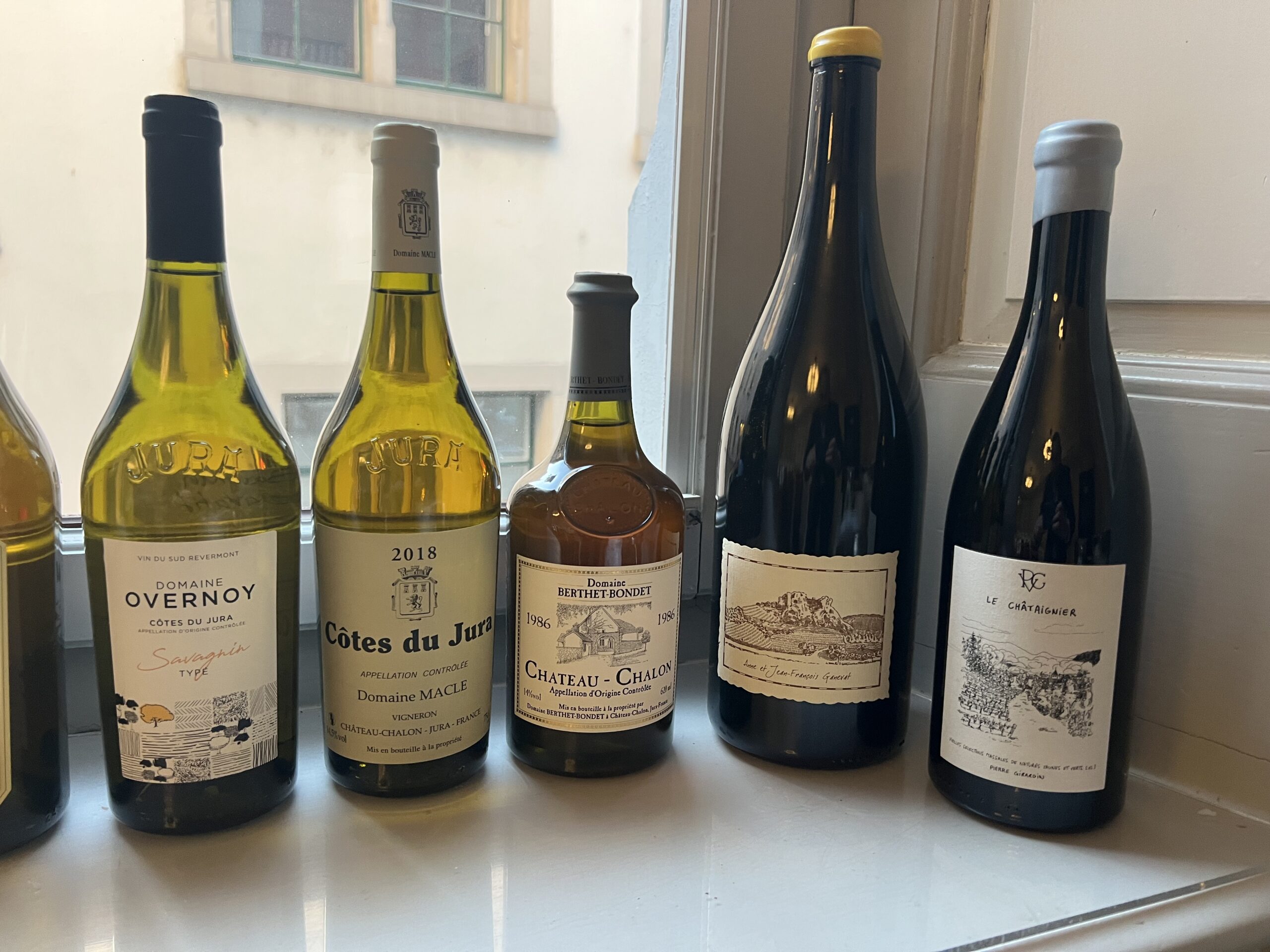
2019 Anne and Jean-François Ganevat Savagnin Côtes du Jura Montferrand – 95 pts
This Savagnin opens with an expressive and inviting nose, offering ripe lemon and yellow stone fruit, underpinned by notable complexity and freshness. The palate shows a gently textural, almost unctuous quality yet remains lifted by vibrant acidity. It sits stylistically between Chardonnay and Chenin Blanc, combining breadth with tension, and finishes with both persistence and poise.
2023 Pierre-Vincent Girardin Savagnin ouillé Le Châtaignier – 94 pts
A distinctly reductive expression, very much in keeping with the domaine’s élevage. The nose is marked by gunflint reduction, alongside lime zest and a subtle herbal note reminiscent of fennel. The palate is taut and racy, with a linear drive and a precise mineral core, showing a modern interpretation of Savagnin.
2021 Romain Labet Chardonnay Les Varrons – 93 pts
The nose here is also firmly reductive, with matchstick notes interwoven with citrus and a clear mineral imprint. On the palate, the wine is incisive and pure, driven by acidity and marked by a strong sense of precision. This is a notably restrained and focused Chardonnay, very much in a contemporary, reductive Jura style.
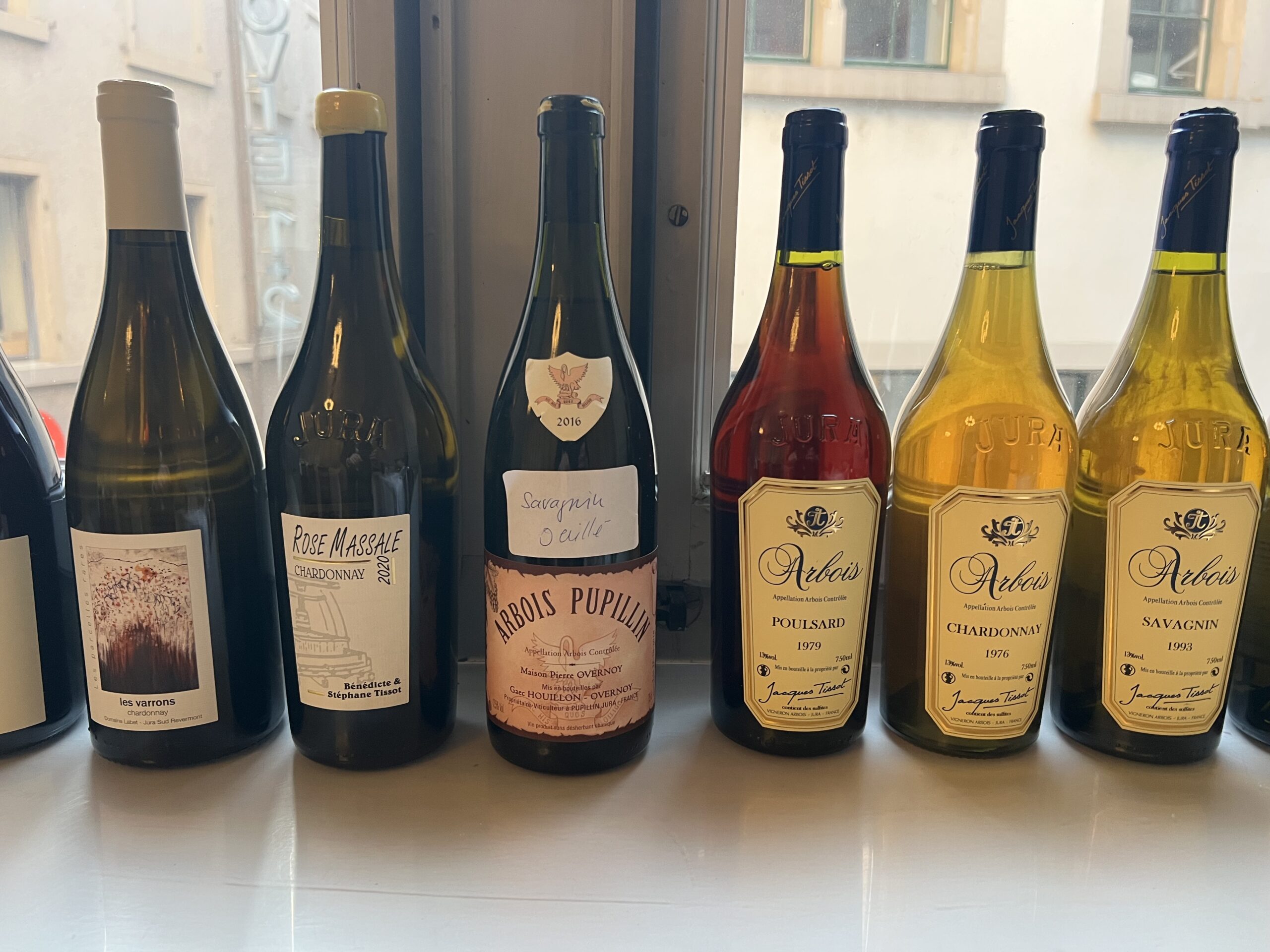
2020 Stéphane Tissot Chardonnay Rose Massale – NR
Here we have apple-led aromatics and a slightly evolved profile. The palate lacks the clarity and precision one might anticipate from this cuvée, especially in comparison to a fresher example previously encountered at the domaine (vintage 2023, which I rated 93pts). On this showing, the balance feels less assured. May be an off bottle.
2016 Emmanuel Houillon (Maison Pierre Overnoy) Savagnin Arbois Pupillin – flawed
The wine is compromised by a crumbly cork, oxidative and cheesy notes obscuring the underlying structure and fruit.
Reds
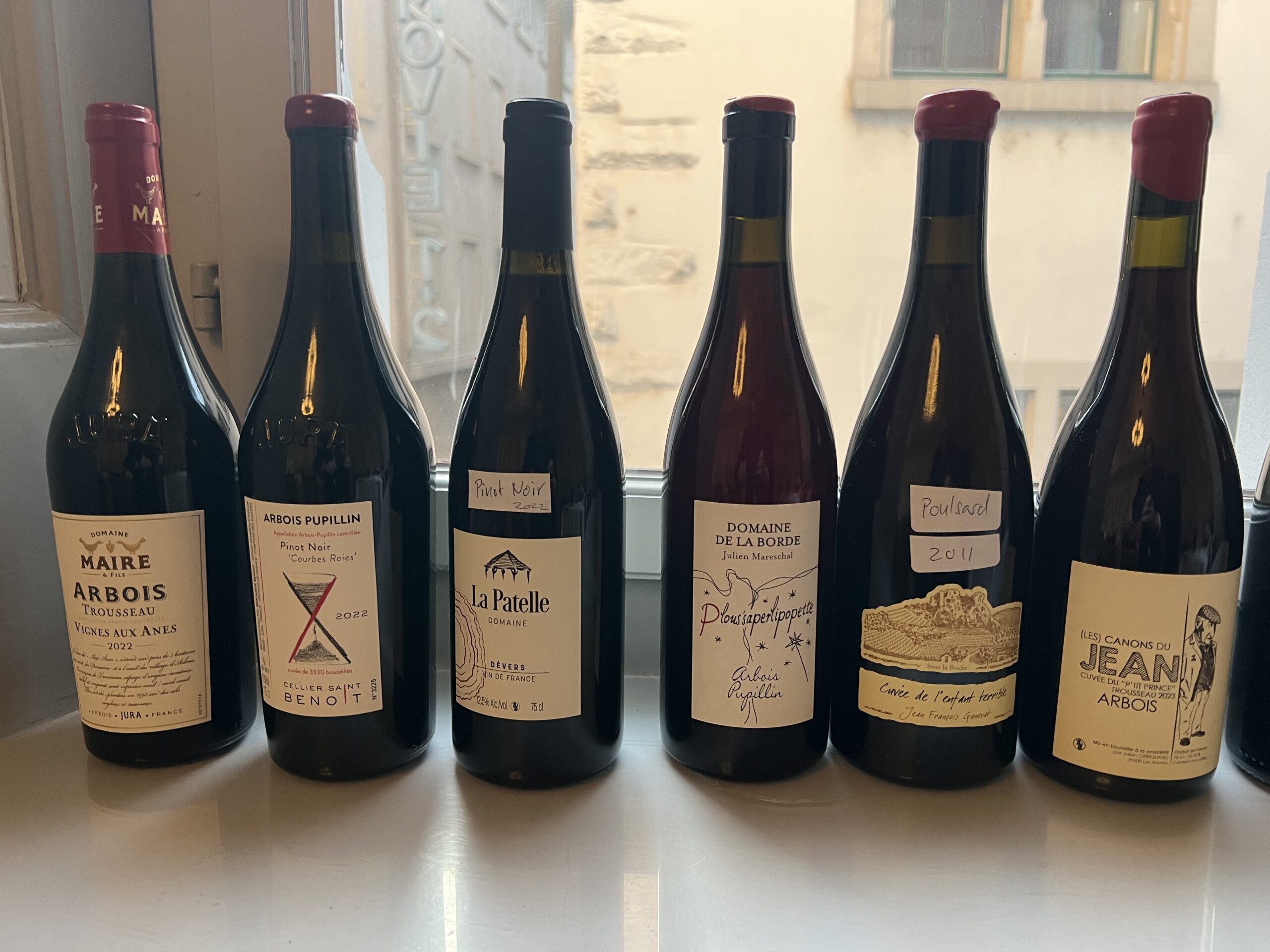
2022 Domaine Maire & Fils Arbois Vignes aux Ânes – 88 pts
This shows straightforward red fruit with a touch of spice, but remains relatively simple in both aromatic range and palate weight. While pleasant and well-made, it sits more comfortably at an entry level, lacking the depth or structure of more ambitious examples.
2022 Cellier Saint Benoît Arbois Pupillin Pinot Noir Courbes Raies – 93 pts
A dense and compact Pinot Noir, combining both dark and red fruit with a distinct earthy undertone. The structure is firm and currently somewhat closed, suggesting that further cellaring will allow greater integration and expression.
2022 Domaine La Patelle Pinot Noir Dévers – pts
The nose is generous and expressive, with meaty nuances alongside both red and darker fruit tones. Freshness on the palate keeps the wine balanced, while its underlying structure indicates good potential for further ageing.
2023 Domaine de la Borde Arbois Pupillin Plou(s)sard “Saperlipopette” – 93 pts
Without having taken a sip, this wine wins the price for the most outragous name on the label… Pale garnet in colour, this Poulsard is highly aromatic, almost immediately expressive from the glass. There is a lightly ‘natural’ or fermentative character, adding complexity to its fragrant profile. The palate is light, fresh and lifted, emphasising finesse and drinkability rather than structure.
2011 Jean-François Ganevat Poulsard Cuvée de l’Enfant Terrible – 95 pts
Despite its very pale garnet hue, this wine delivers remarkable aromatic intensity. The nose combines raspberry fruit with sweet spice and subtle earthy, slightly ‘funky’ elements. The contrast between colour and aromatic depth is striking, and the wine retains both freshness and complexity with age.
2023 Julien Crinquand Cuvée du P’tit Prince – 94 pts
Light to medium garnet in colour, this cuvée shows more structure than the Poulsards besides it. There is a combination of earthy and lightly wild notes alongside red fruit, with a well-filled mid-palate. The overall impression is of a more structured, Burgundian interpretation, recalling the profile of a village-level Morey-Saint-Denis.
Oxidative / Traditional Styles
2019 Domaine Overnoy Savagnin Côtes du Jura Typé – 89 pts
A delicate and relatively restrained oxidative Savagnin, showing classic notes of nuts and light sherry. The palate remains fresh and surprisingly light, favouring finesse over power.
2018 Laurent Macle Côtes du Jura Tradition – 92 pts
A step up in aromatic intensity, with a more pronounced savoury profile. Walnut and oxidative notes are clearly present, supported by bright acidity that keeps the wine energetic and well-balanced.
1986 Domaine Berthet-Bondet Château-Chalon – 94 pts
This mature Vin Jaune shows considerable complexity, with the extended ageing under voile and in bottle lending both aromatic nuance and textural harmony. The oxidative profile is layered and the finish is long and composed. It remains particularly well suited to pairing with Comté and similarly structured cheeses.
Older bottles
1979 Domaine Jacques Tissot Poulsard Arbois – 91 pts (TCA)
Initially attractive, with red fruit, spice and a touch of Jura’s characteristic earthy character. However, light cork taint becomes increasingly apparent in the glass, ultimately detracting from the wine’s otherwise appealing profile.
1976 Domaine Jacques Tissot Chardonnay Arbois – flawed
This bottle shows clear signs of oxidation. At this level of maturity, bottle variation is a fact and this example does not provide a representative expression of the wine.
1993 Domaine Jacques Tissot Arbois – 89 pts
An advanced wine, with developed, sherry-like notes indicating it has moved beyond its optimal drinking window. While still of interest, it lacks the freshness and structure it would once have possessed.
Autor: Christian Raubach, WSET3, FWS, WSG Champagne Master
March 2026