The Vintage 2016
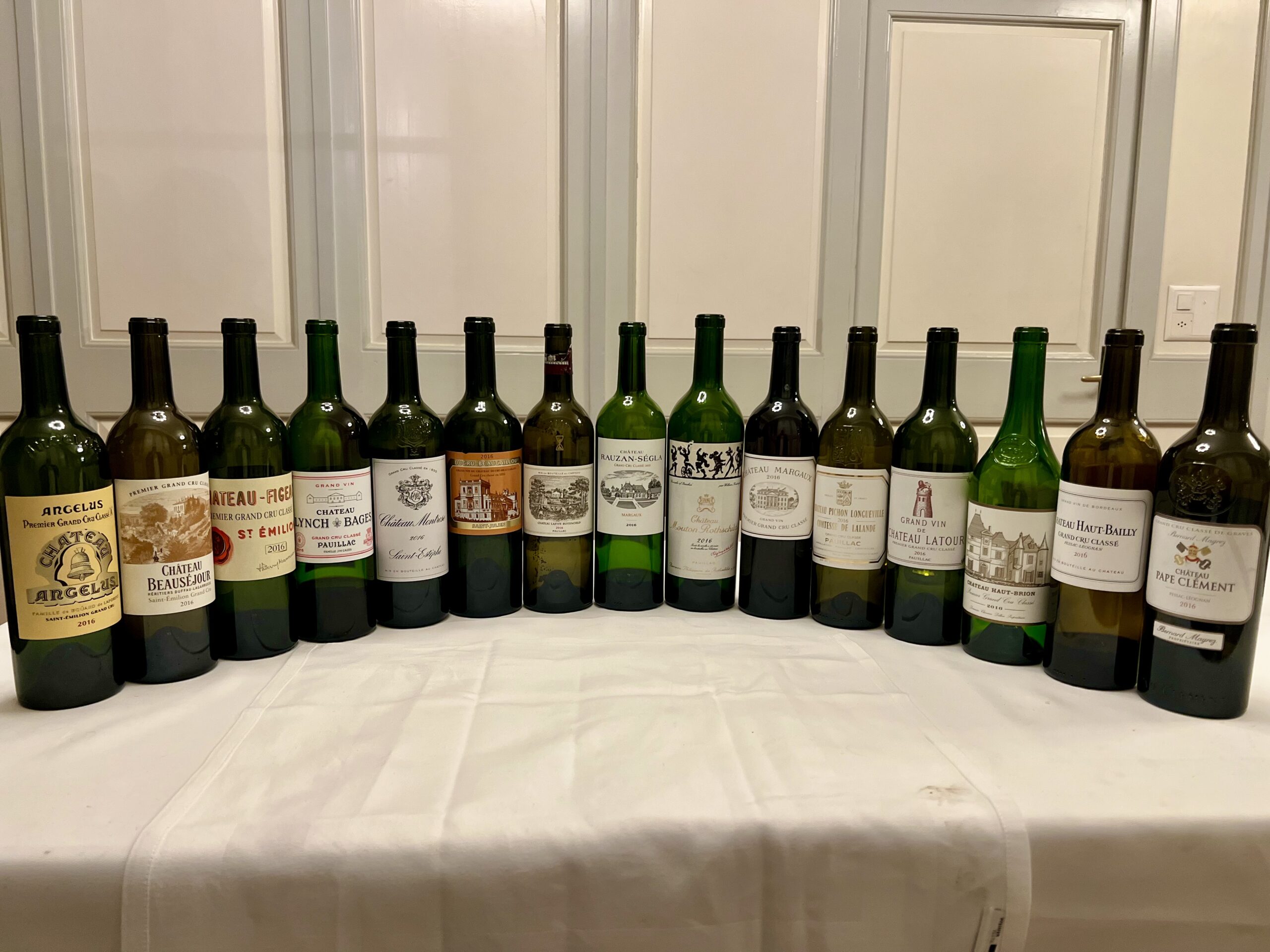
Ten years on, it is a pleasure to revisit Bordeaux 2016 through a serious lineup of 15 leading wines, including all five First Growths. This was the kind of tasting that allows the vintage to speak in full sentences rather than fragments, showing not only headline quality but also stylistic cohesion across châteaux. All wines were tasted single blind, a format I like for balancing honest appraisal with enough context to read the room and the wines’ identities.
A few observations on the vintage:
- 2016 remains my favorite vintage, defined by incredible depth, perfect precision, moderate alcohol levels, freshness, superb tannin quality and a spellbinding balance.
- What continues to impress is the absence of excess. There are hardly any wines that feel too hot, too ripe or too extracted. Instead, the purity of fruit is the defining signature, fresh and delineated, with Cabernet and Merlot both speaking clearly without cosmetic sweetness or forced density.
- At ten years of age, many but not all wines are open for business with a bit of air, offering real pleasure already. Yet the vintage is still very much in its first act. The greatest bottles retain a sense of youthful reserve, and the gap between what they show today and what they will become remains wide. From here, the trajectory points upward, with complexity, nuance and tertiary dimension still to come.
- Taken as a whole, I continue to place 2016 above every other Bordeaux vintage of the past forty years. It is, to my palate, the rare modern year that combines the completeness of a truly great classic vintage with the purity and polish of contemporary viticulture. Compared to the riper recent years of 2015, 2018, 2019, 2020 and 2022, 2016 feels more controlled, more transparent and especially more profound.
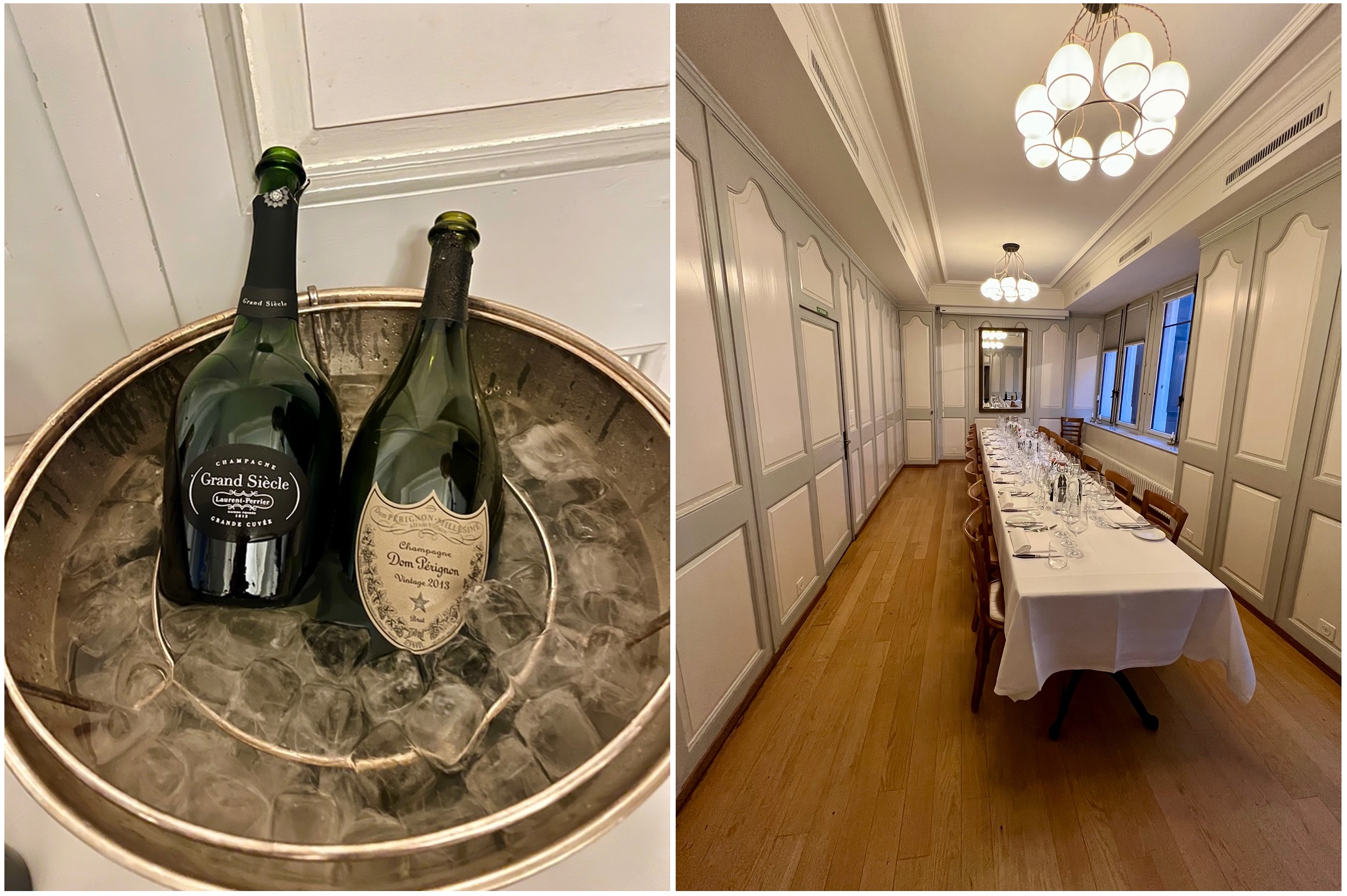
With a more than decent aperitif, participants were greeted at the separé of Restaurant Mère Catherine
Tasting Notes
Haut Bailly 2016 – 92pts
TN: Haut Bailly is rarely about early approachability, so it was no surprise that this was one of the few wines still not fully accessible. The profile is classic and mineral driven, with the bouquet and palate shaped by stony Pessac character and fine dark fruit, plus a touch of brighter red berries on the palate. At this stage, there is not quite enough fruit sweetness to create full balance and the complexity is moderate. The tannin quality is refined, the 2016 freshness and precision are clearly present, and further ageing should improve harmony. A good showing and consistent with prior bottles I have rated 93pts. Quickly double decanted five hours before the tasting with little change.
Pape Clément 2016 – 92pts
TN: The nose is one of the more muted expressions of the evening. The palate, however, brings impressive substance and a broad fruit spectrum, layered with herbs, minerality and well judged oak. Fine tannins and good freshness underpin the wine, though the balance is not yet fully settled and it feels a touch wild today. Pape Clément can lean ripe and oaky, but in 2016 it feels more controlled and complete. This may well become a benchmark vintage for the estate. Not decanted, slow ox for roughly one hour. This was the WOTN #5 of the Group
Haut Brion 2016 – 89pts
TN: One of the disappointments of the tasting on this occasion. The wine showed wild and slightly shrill, built around very ripe, sugary red berries with a touch of alcohol warmth. And yet, the texture is ultra fine and the overall feel is remarkably light and ethereal, suggesting serious substance beneath the surface. Notably, when opened five hours earlier and quickly double decanted back into the bottle, it appeared far more balanced and composed, scoring 95 to 96pts, in line with a strong bottle tasted weeks before. I would not write it off, but it may always show a touch too warm and ripe to live up to the many perfect critic scores. Haut-Brion in its hot city climate has a ripeness problem these days.
Latour 2016 – 94pts
TN: The nose holds its cards close, muted and reticent. The palate shows more, though still far from fully open, and the depth is already impressive. Pauillac minerality dominates, wrapped around Latour’s classic nuttiness and an infinite core of sweet red and dark fruit. Expectations were high and not fully met today, yet the structural frame is superb, with a wall of ultra fine tannins, satin texture and superb freshness. This was clearly the wine most in need of extended cellaring and it is easy to see why it could become one of the very best 2016s. Decanted for roughly three hours.
Mouton Rothschild 2016 – 95pts
TN: At five years of age this was tightly coiled, only hinting at what it might become. At ten years it is far more expressive on both nose and palate, showing a broad spectrum of mostly red fruit with a beautiful blue fruit core. Pauillac minerality and herbs frame the wine, joined by a subtle but irresistible burnt sugar and toast signature. Those notes were even more pronounced right after the quick double decant five hours earlier, when it scored 97pts. Long, concentrated and impeccably structured, this will be thrilling in ten to twenty years. This was the WOTN #5 of the Group
Pichon Lalande 2016 – 98pts
TN: The clear winner of the tasting and, in spirit, a rebirth of the legendary 1982 as it shares the same aromatic traits: Bright red berries, pure dark fruit and blue tones are wrapped in beautiful minerality and that dense, luxurious layer of burnt sugar and toast that defines the 1982. Everything is packed into a flawless structural frame (more elegant, more finesse than the 1982 ever had). It was already wide open on arrival and five years ago, and it only seems to have gained with time. Hard to imagine this shutting down. Few 2016s deliver this effortlessly and so consistently in terms of joy. Quickly double decanted five hours before the tasting, excellent then and even better later. This was the WOTN #2 of the group.
Château Margaux 2016 – 96pts
TN: The highlight here is the elegance and delicacy, unmatched by any other wine in the lineup. In true Margaux fashion, it offers purity and perfume, with ripe yet fresh strawberries at the core surrounded by a rainbow of subtle accents. Deep and complex without any sense of weight, it floats with an airy, delicate grace. I am not convinced it has the gravitas of 2015 or 2009, but it offers a different kind of pleasure, almost Burgundian in contour. Quickly double decanted five hours before the tasting.
Rauzan Ségla 2016 – 93pts
TN: A beautiful Margaux with a level of finesse and elegance few Bordeaux achieve. Delicate throughout, with the finest tannins and pure red fruit. It will never have the depth of the truly great wines, but it should drink beautifully over the next twenty years, and tertiary development may add an extra point. The 2018 shows more depth and is more exciting today, though this 2016 is clearly the more delicate wine. Not decanted, slow ox for two hours.
Lafite Rothschild 2016 – 97pts
TN: Wow. A strikingly singular Lafite, defined by the most beautiful blue fruit, a profile that feels increasingly rare in warmer years. The wine is deeply complex, every layer delivered with perfect precision, and the Pauillac frame is unmistakably Lafite in its finesse and elegance. The group ranked it joint first with Pichon Lalande, though I had it a step behind due to a slightly muted nose. This could become a perfect wine and stands among my finest Lafite experiences alongside 2005 and a magnum of the legendary 1900. Easily 97/98pts already today. Double decanted roughly six hours before the tasting, still quite closed at that point. This was the WOTN #1 of the Group
Ducru Beaucaillou 2016 – 95pts
TN: Expressive on nose and palate, showing pure dark berries with red fruit hints, fine herbs and a strong mineral core, all delivered with clarity and precision. Ducru can be muscular, but here it is surprisingly elegant, almost delicate, with superb freshness and balance. It lacks the final surge of power for an even higher score. Compared to a bottle four years ago, this was finer and more open, despite no decanting beyond slow ox for roughly two and a half hours.
Montrose 2016 – 92pts
TN: Opened and quickly double decanted roughly six hours before the tasting. Immediately after opening it was stunning, with the purest red fruit, coffee notes and deep minerality in perfect balance, scoring 97pts at that stage. While many wines gained with air, this one largely shut down, showing only flashes of exciting red berries. I have no doubt about the wine’s quality and have rated it up to 97pts before, but this bottle did not show that level at the table.
Lynch Bages 2016 – NR
TN: Completely off. Extremely drying and cheesy. I have had excellent bottles before (rated around 95pts), so this was clearly flawed.
Angélus 2016 – 94pts
TN: A fine vintage for Angélus, free of the excessive extraction and ripeness that sometimes marked the early 2000s. Ripe yet still fresh red fruit dominates, clearly richer than the Left Bank wines here but still on the right side of balance. Complex, well structured and supported by good freshness, with a slight touch of brett that adds character. Today it feels a touch sweet for my taste, but time and tertiary development should bring greater harmony. Not decanted, slow ox for three hours.
Beauséjour 2016 – 86pts
TN: Aside from the flawed Lynch Bages, the weakest wine of the tasting. Unfortunately, this bottle was consistent with several recent vintages I’ve tasted over the past few years: too ripe, too dense and excessive, even in a fresh year like 2016. Lactic notes added further distraction. I fear it will dry out quickly as oxidation emerges. These are wines that may show well en primeur but often fail to age convincingly, in my opinion. Not decanted, slow ox for three hours.
Figeac 2016 – 96pts
TN: Since 2015, Figeac has been among the very best wines in Bordeaux, never too ripe and built around fresh, mostly red fruit with floral notes, minerality and herbal complexity. The 2016 follows that exact template. Elegant, finessed and fresh in a way few Right Bank wines achieve, it is already superb today and should improve further as tertiary aromas develop. It may not be the deepest of the top 2016s, but it is beautifully complete and feels like the total package. Not decanted, slow ox for three hours. This was the WOTN #3 of the Group
Author: Andy Schnyder
February 2026